
Puglia: The Italian Summer That Feels Like Italy
- The Travel Moment

- Jun 14
- 6 min read

Puglia is the heel of Italy, stretching between the Adriatic Sea to the east and the Ionian Sea to the west. The land is wide and open, with views that reach for miles and a quality of afternoon light that belongs entirely to this part of the south. The pale limestone towns hold that light in a way you notice from the first evening. The olive trees are some of the oldest in Europe and the oil they produce is extraordinary. Burrata was born here. Orecchiette is still made by hand in doorways. The seafood changes as you move from one coast to the other.
This is a region shaped by centuries of civilisations passing through: Greek, Roman, Byzantine, Norman. Each one left something behind in the architecture, the food, the particular way this part of Italy carries its history. The baroque of Lecce, the trulli around Alberobello, the masserie of Ostuni: each is the kind of thing you find only here.
Puglia's main areas have their own version of the summer, from the cliffs of Polignano down to the golden streets of Lecce. The road connects them all.
• • •
How to Build Your Bases
Where you stay in Puglia depends on what you want the days to feel like.
A base in Monopoli or Savelletri puts almost everything else within easy reach, turning the rest of the region into day trips rather than full moves.
A few nights in Alberobello or Ostuni changes the texture of the trip. Sleeping inside a trulli or a masseria is a different experience from visiting for an afternoon.
Time in Lecce brings a second coast into the trip, with the kind of beaches that define an Italian summer in photographs: pale sand and turquoise water you can wade into for ages.
• • •
The Road Is Part of the Trip
You land in Bari. You pick up a car. And then Puglia opens up.
The road south along the coast to Polignano takes less than an hour. From there, each town is a short drive from the next. The Valle d'Itria appears through the olive groves. Ostuni glows on its hill. Lecce waits at the end of the road. The drives between places are often as beautiful as the places themselves.
Choosing a rental with full coverage means the narrow medieval streets and the track to a masseria become part of the adventure rather than a worry.
Check car availability with Centauro or Expedia.
• • •
When to Come
Summer is when Puglia feels most like itself, though even within summer, June, July, August, and September each have their own character, and the month you choose changes the feeling of the whole trip.
June has a quiet, settled quality. The light is warm and clean. The countryside is still green after spring. The coast is open, the beaches calm and easy to enjoy, and the evenings are long, warm, and unhurried. June is a particularly good time to come, if your calendar allows it.
July and August are Puglia at full volume. The coast is full of life, the towns are animated late into the night, and the sea is warm and inviting. This is the most Italian version of summer here, and the one most people picture when they imagine Puglia. Booking ahead for accommodation and dinner reservations keeps the days easy, and mornings are the best time to be out before the heat settles in.
September is the month most travellers who have been before prefer. The summer energy softens. The sea is at its warmest. The olive harvest begins in the groves and there is a particular quality to the late afternoon light. Quieter, more intimate, deeply beautiful.
• • •
Polignano a Mare
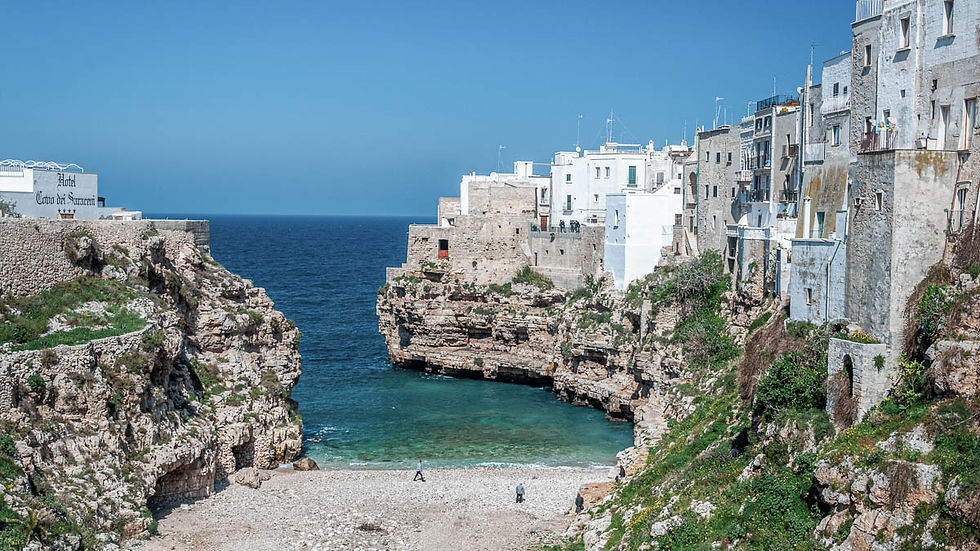
The first time you see Polignano from the cliff edge, you understand immediately why this place draws people back. The old stone walls. The sea below, a colour that photography can only hint at. The sheer drop from the cliffs to the water below. It stops you.
A morning where the light comes in off the Adriatic and the streets are quiet. Dinner above the water with the sound of the sea below. These are the hours that stay with you.
The beaches here are rocky Adriatic coves, dramatic and clear rather than wide and sandy. The most beautiful ones sit directly below the cliffs. They reward arriving early.
The hotels here are small, boutique, and romantic, many with views onto the cliffs. Booking ahead secures the room with the view. One or two nights is enough to feel the place fully, before the coast continues on toward Monopoli.
• • •
Monopoli and Savelletri

Monopoli wakes up with the fishing boats. The harbour is working and real, with a daily rhythm that has little to do with tourists. The old town has good restaurants and stone streets, and the sea is clear and part of daily life. You swim in the morning, have lunch somewhere with a view, and let the afternoon go at whatever pace it chooses.
Savelletri, a short drive south, is where some of the finest resort hotels in Puglia sit. The kind of property where every day is shaped around you: the spa in the morning, the beach club at midday, the pool as the light softens in the evening. The Adriatic beaches here are sandy and open, with clear water and easy access.
Together, Monopoli and Savelletri make one of the easiest bases in Puglia. Polignano is fifteen minutes north. Alberobello is thirty minutes inland. Ostuni is twenty minutes south. Everything is within reach without moving your bags. And because the area spans a working harbour town and a resort coastline side by side, it suits very different kinds of travellers from the same base.
Browse stays in Monopoli and Savelletri.
• • •
Alberobello and the Valle d'Itria

Drive inland from the coast and the landscape changes. The trulli appear through the olive groves: whitewashed stone cones, ancient and unlike anything else. Alberobello is where they are most concentrated, and the town delivers the image completely.
The Valle d'Itria around it is its own world. Locorotondo, Cisternino, Martina Franca. Smaller towns with quieter rhythms. Trulli scattered through the groves. Roads that reward driving slowly.
The trulli suites here are their own kind of stay: stone interiors, private gardens, and a stillness at night that belongs entirely to the countryside. A few nights in a trulli suite in the valley, waking to the sound of the countryside with nowhere to be until dinner, is the kind of thing you find yourself describing to friends months later. The Adriatic coast is thirty minutes away when you want it. Most days you will find the valley is enough.
• • •
Ostuni and the Countryside

You see Ostuni long before you arrive. A white city rising from the olive groves on a hill. The centro storico is a maze of stone alleys and flowering walls, quiet in the early hours before the heat settles in.
The real pull of this part of Puglia is what surrounds the city. Masserie: old farmhouses converted into private estates with pools, gardens fragrant with herbs and jasmine, and long outdoor tables where dinner goes on well past dark. The silence at noon. The smell of the olive groves. The feeling that the week is stretching out rather than running out.
Some of these estates are working farms, producing their own oil and wine. Others exist purely for rest. The Adriatic coast is twenty minutes away, though the traveller who settles into one of these places often finds the days passing without ever feeling the need to leave.
• • •
Lecce

Lecce sits in the south of Puglia, built from a warm gold limestone that seems to hold the light long after the sun has gone. In the evening, the facades catch the last of it and the whole place glows from within.
The old town is small enough to walk everywhere, and rewards wandering without a plan. Streets that belong to the people who live there. Pasticciotto for breakfast. Orecchiette for lunch. Wine that tastes better because you are drinking it here. Days build their own rhythm: a café you return to without thinking about it by the second morning, long afternoons in the shade, evenings that begin early and end late.
Lecce is also the gateway to the Ionian coast, where some of the most beautiful beaches in Italy are found. The Ionian coast to the west offers something completely different from the Adriatic: long stretches of pale sand, clear warm water, and a gentleness entirely its own. Torre dell’Orso is thirty kilometres away. Punta Prosciutto and Porto Cesareo are on the Ionian side, around forty-five minutes.
The hotels here are mostly palazzo conversions in the old town. Elegant, quiet, and genuinely beautiful. Three or four nights gives you time for the city itself and for the coast too, on a side of Puglia with a character all its own.
• • •
Puglia has its own way of staying with you. Here, there is a particular kind of summer that Italy is known for: long lunches, afternoons that disappear, evenings that begin late and never quite end. In Puglia, that is simply how the days unfold. By the end of your trip, it stops feeling like something you are visiting and starts feeling like something that changed you, even a little, for good.
Affiliate links are used on this page. If you book through them, The Travel Moment earns a small commission at no extra cost to you.


Comments